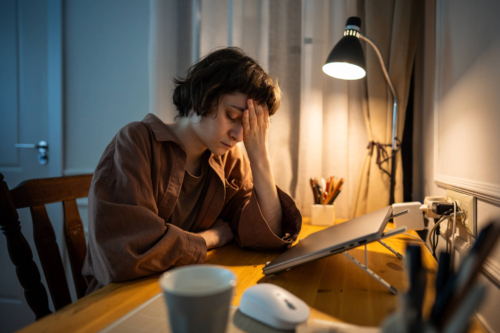
Have you ever reached the end of the day feeling completely exhausted, but your mind is still racing? You may be tired, but you can’t seem to switch off. Perhaps you’re struggling to concentrate, feeling more irritable than usual or finding that things which normally wouldn’t bother you suddenly feel overwhelming.
You may simply think you’re having a difficult time. Perhaps you’ve got too much going on at work, you’re juggling family responsibilities, or you’ve been under pressure for a long time.
But sometimes, these can be signs of burnout.
I often see people who have spent so long looking after everything and everyone else that they haven’t noticed how depleted they have become themselves. Burnout doesn’t necessarily happen overnight. It can build gradually, until feeling stressed, tired and overwhelmed starts to feel like your normal state.
Recognising the signs can be an important first step towards making a change.
What does burnout feel like?
Burnout can affect us in different ways, both physically and emotionally. You may recognise some of these signs straight away, while others may have become so familiar that you’ve simply come to accept them as part of everyday life. But feeling exhausted, overwhelmed and unable to switch off shouldn’t have to become your normal.
You’re constantly tired
One of the most common signs is a feeling of exhaustion that doesn’t seem to go away. You may sleep but still wake up feeling tired. Getting through the day can feel like an effort, and you may find yourself relying on caffeine, sugar or other things just to keep going. Sometimes the problem isn’t that you’re not getting enough sleep. It’s that you’re not getting enough opportunity to properly switch off and rest.
Your mind won’t slow down
Do you lie in bed thinking about everything you need to do tomorrow? Or find yourself going over conversations, problems and unfinished jobs when you’re supposed to be relaxing? When we’ve been under pressure for a long time, it can become difficult to switch off. You may find that your thoughts are constantly racing and that even when you have some time to yourself, you don’t really feel relaxed.
You’re struggling to concentrate
Burnout isn’t just about feeling physically tired. Mental fatigue can make everyday tasks feel much harder than they normally would. You might forget things, struggle to make decisions or find it difficult to concentrate on a book, television programme or even a conversation. If you’re normally organised and capable, finding yourself struggling to think clearly can be particularly frustrating – and can leave you wondering what has happened to you.
Small things feel overwhelming
When you’re feeling emotionally drained, your tolerance for everyday stresses can change. Something relatively minor may suddenly feel like the final straw. You might become more irritable, tearful or anxious, or find yourself reacting more strongly than you normally would. You may even find yourself thinking, “I just can’t cope with one more thing.”
If feelings of anxiety are becoming difficult to manage, stress and anxiety counselling in Crawley may provide a supportive space to explore what’s contributing to those feelings.
You’re experiencing physical symptoms
Stress can affect us physically as well as emotionally. You may notice headaches or migraines, muscular tension, digestive problems, changes in your appetite or a general feeling of exhaustion. Your sleep can also be affected. Some women may even notice changes to their menstrual cycle during periods of prolonged stress. Of course, these symptoms can have many different causes. If you’re experiencing persistent or worrying physical symptoms, it’s important to speak to your GP or another appropriate healthcare professional rather than assuming that burnout is responsible.
You’ve lost interest in the things you enjoy
Perhaps you’ve stopped seeing friends, lost interest in hobbies or don’t feel like doing the things you usually enjoy. When you’re exhausted, even enjoyable activities can feel like another commitment. You may find yourself withdrawing from other people because you don’t have the energy to talk or socialise. Over time, this can leave you feeling increasingly disconnected.
Why don’t we recognise burnout sooner?
One of the difficulties with burnout is that we can become very good at carrying on. We tell ourselves that things will get easier after the next deadline, once the children are back at school, when work calms down or when we’ve dealt with everything on the list.
But there is always another deadline. Another job. Another person who needs something.
I think many of us have become accustomed to being busy and productive, and sometimes we don’t realise just how much pressure we’re putting ourselves under. What’s more, some of the signs of burnout – such as tiredness, poor sleep, anxiety, brain fog and feeling emotionally overwhelmed – can be mistaken for other things, including anxiety, depression or the hormonal changes associated with perimenopause and menopause.
That’s why it’s important not to assume that everything you’re experiencing is burnout. If you’re concerned about your symptoms, talking to your GP can help you understand what’s going on.
If low mood is also becoming part of what you’re experiencing, you may find it helpful to learn more about stress and depression counselling in Epsom and the support available.
Burnout isn’t a sign that you’ve failed or that you’re not coping well enough. It can be a sign that you’ve been coping with too much for too long – and that something needs to change.
If you’re struggling with burnout, I can help
If you’re recognising some of these signs in yourself, you don’t have to wait until you’re completely exhausted before asking for support.
This is where I can help. Through counselling, I can offer you a safe and supportive space to explore what’s happening, understand the patterns that may be contributing to your stress and consider what you might need to change.
I also offer hypnotherapy in Epsom, yoga, breathing practices and meditation, which can help you slow down, manage stress and reconnect with yourself.
There isn’t a one-size-fits-all approach to wellbeing, so I take the time to understand you and what you’re experiencing before deciding what might be most helpful.
For some people, gentle movement and time to focus on themselves can also be a valuable part of managing stress. My yoga sessions in Epsom offer another way to incorporate wellbeing into your routine.
If you’re feeling exhausted or overwhelmed, please get in touch. We can talk about whether counselling, hypnotherapy, yoga, breathing practices, meditation or a sound bath journey could help, with sessions available at my clinics in Epsom, Surrey and Crawley, West Sussex.
Call 07973 410375 or email belinda@belindadimmockwellbeing.co.uk to find out more.