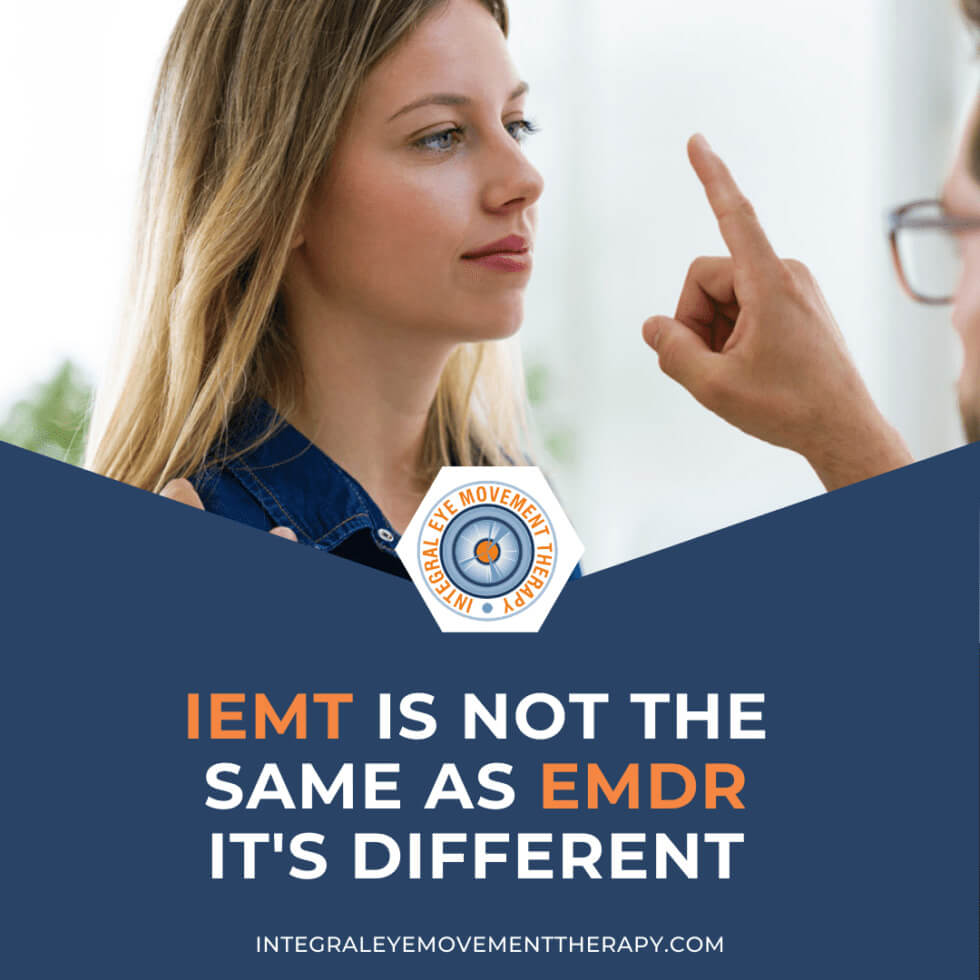
IEMT (Integral Eye Movement Therapy)
Integral Eye Movement Therapy (IEMT) is a brief process for changing undesired emotions and behaviour, such as for trauma, anxiety, anger, habits, fear, shame, guilt, stress and depression.
Each person has their own representation, or version of events that happened to them, which actually may not be what happened! However a person’s experience has been, this will have imprinted upon them.
IEMT works on the memory and clears all the emotion, along with a sense of identity (in other words who we are and how we view ourselves). It is helpful in stopping the person deliberately retrieving it, as eye movements recode and clear the undesired emotion(s) or sense of identity imprint(s), where a client may have previously fallen back into them.
IEMT is a model built around addressing and resolving the 5 Patterns of Chronicity, which are specific problematic, behavioural patterns and responses.
To do this, IEMT uses a set of techniques which build resources inside the problem state, brings the client into the present and again, enables them to stay out of past negative experiences permanently.



Ready to Take the First Step?
Sessions are offered in a safe, calm and tranquil setting whilst offering an environment which is confidential, open, empathetic, congruent (genuine) and non-judgemental warmth.
Counselling is about helping others giving them the guidance to understand themselves better and the tools to make change in their life
Take your first steps today by calling me or dropping me an email.
belinda@belindadimmockwellbeing.co.uk
07973 410 375